
The Mistake: Judging Safety By Whether It Still Opens
Here's the argument that plays out in half the garages in Polk County: one spouse says the door is fine, it goes up, it goes down, why spend money. The other spouse read something online about garage door injuries and wants it replaced. Both are reacting to the same tempting logic — if nothing is visibly broken, there's nothing to fix. That logic works for a lot of things in a house. It does not work for garage doors, because the dangerous parts of an old door are almost never the parts you see moving.
A door from the 1990s or earlier can look and function perfectly while missing safety features that have been standard for decades. That's not a scare tactic — it's just how garage door technology changed without most homeowners noticing, because nobody touches their garage door setup unless something breaks.
What Actually Needs Retrofitting
- Photo-eye safety sensors. If your opener doesn't have two small sensors mounted a few inches off the floor on each side of the track, it has no way of knowing if a kid, pet, or bike is in the door's path before it closes. This is the single biggest gap on pre-2000 systems and the easiest to fix by upgrading the opener.
- Auto-reverse force sensing. Older openers close with a fixed amount of force and don't stop if they meet resistance. Newer units sense pressure and reverse. If your door has ever closed on something and kept going instead of stopping, that's this missing feature, not bad luck.
- Exposed torsion springs without a safety cable. A torsion spring under tension can fail violently. Modern setups run a cable through the spring so it can't become a projectile if it snaps. If you can see a bare spring with nothing threaded through it, that's worth fixing regardless of how old or new the door is.
- Manual release mechanisms that have rusted stiff. In Fort Meade's humidity, the red emergency release handle and its cable can corrode and seize over the years. If you can't pull it free by hand during a power outage, it's not doing its job.
What You Can Honestly Leave Alone
- Solid steel or wood panels that aren't rusted or warped. Age alone doesn't make a panel unsafe. If it's straight, closes flush, and shows no bubbling or soft spots, it's structurally fine.
- Manual locks and older-style handles. Cosmetically dated, functionally harmless. Replace them when you want a new look, not because they're a hazard.
- The original track, if it's not bent. Old steel track often outlasts the door itself. Check for rust pitting or gaps where it bolts to the frame, but don't replace track just because it's old.
The Florida-Specific Part of This Argument
Doors built before modern wind-load codes often weren't engineered for the pressure a storm puts on a garage door — and in Polk County, a failed garage door during high wind is one of the more common ways a roof gets compromised, because the whole house pressurizes once the door gives way. If your door predates reinforced wind-load bracing, that's worth addressing before hurricane season winds down for the year, not after. Separately, humidity and afternoon downpours mean hardware corrodes faster here than it would somewhere dry — check hinges, rollers, and spring coils for rust at least twice a year, and swap anything that's pitted before it fails mid-cycle.
When to Call Fort Meade Garage Door Pro
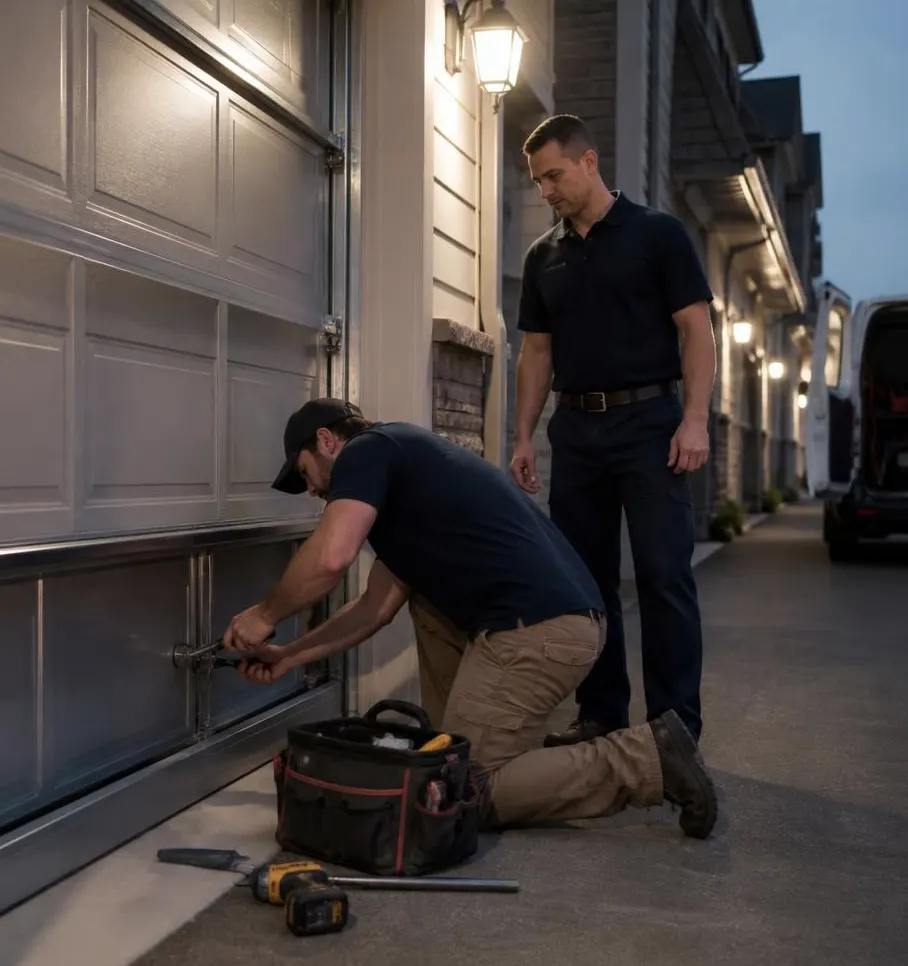
If you're not sure which category your door falls into, that's exactly what a tune-up visit is for. Our Garage Door Maintenance & Tune-Up service checks springs, cables, rollers, and hardware for corrosion or wear and tells you plainly what's cosmetic and what's a real safety gap. If your opener is original to the house, our Garage Door Opener Installation service can add modern sensors and auto-reverse protection without replacing the door itself — often the single biggest safety upgrade for the smallest cost.
Settle the argument for good. Call Fort Meade Garage Door Pro and we'll give you a straight answer on what your door actually needs — serving Fort Meade, Bartow, Lake Wales, Mulberry, and the rest of Polk County.