
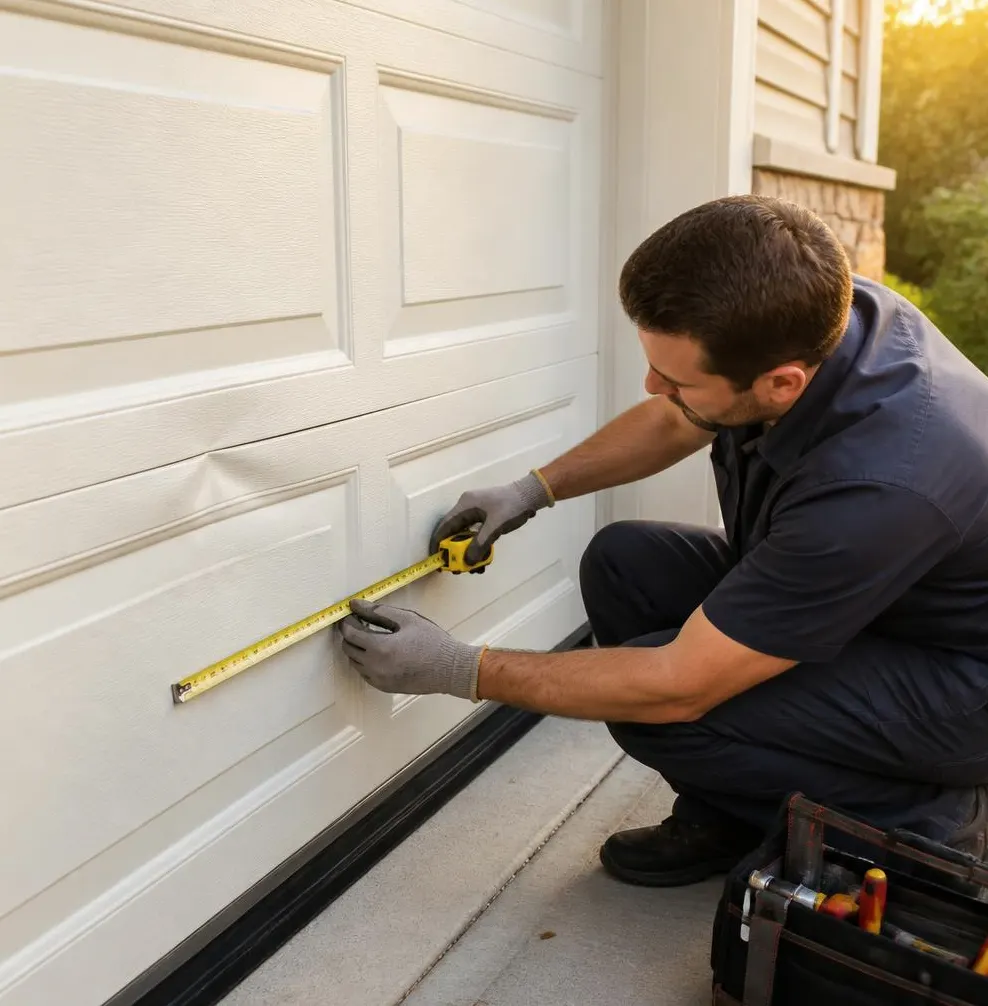
What a Technician Sees on This Call
Most calls about a new door start the same way: the current door is swollen along the bottom panels from humidity, the hardware has surface rust from a summer of afternoon downpours, or a storm bent a track enough that patching it doesn't make sense anymore. The homeowner wants to know one thing before anything else — what's this going to cost? The honest answer is “it depends,” but it depends on a short, specific list of things, and once you know them you can estimate your own range pretty closely.
What Actually Moves the Price
Garage door pricing is not random. A handful of factors account for almost all of the difference between a budget door and a premium one:
- Material — steel, wood, wood composite, aluminum, or fiberglass. Steel is the baseline; wood and custom composites cost more.
- Insulation — a single-layer non-insulated door costs less than a double- or triple-layer insulated door with a thermal break.
- Size — a single-car door costs less than a double-car door, and taller or wider custom openings add to both material and labor.
- Windows and hardware — decorative glass inserts, faux wood grain finishes, and carriage-style hinges and handles all add cost over a plain panel door.
- Wind-load rating — doors built to meet higher wind-load requirements use heavier gauge steel and reinforced track hardware, which costs more than a standard-wind door. This matters here, since hurricane-season wind loads are a real design factor for garage doors in this part of Florida, not a cosmetic detail.
- Labor and removal — hauling away the old door, adjusting the opening, and reinforcing track or jamb hardware all add to the installed price, separate from the door itself.
Typical Price Ranges, Installed
These are national ranges, not quotes, and your actual number will depend on the factors above plus local material and labor costs. Use them to sanity-check an estimate:
- Basic steel, non-insulated, single layer: roughly $700–$1,200 installed. Functional, no-frills, common on older homes and rental properties.
- Steel, insulated, double-layer: roughly $1,000–$2,500 installed. The most common replacement choice — better R-value, quieter, more resistant to denting and the expansion/contraction that comes with heat and humidity swings.
- Wood composite or wood-look steel: roughly $1,500–$3,500 installed. Gets the look of real wood without the swelling and rot risk that comes with actual wood in a humid climate.
- Aluminum or glass-panel contemporary doors: roughly $1,800–$4,500 installed. Popular for a modern look, but worth asking about coastal-grade or salt-air-resistant hardware if you're closer to the Gulf side of the state.
- Custom wood or carriage-style doors: roughly $3,000–$10,000+ installed. Real wood, heavy hardware, and custom sizing push these to the top of the range. Carriage style with faux hardware on an insulated steel base is a popular middle ground — it gets the look for closer to the steel insulated price.
Costs That Often Get Left Off the First Quote
- A new opener, if the old one isn't compatible with the new door's weight or track style — typically a separate line item.
- Trim, weather seal, and jamb repair if the old opening has rot or rust damage.
- Reinforced wind-load hardware if your current track and header weren't built for it.
- Haul-away and disposal of the old door.
Repair or Replace?
Not every problem on an older door means a full replacement. Here's a rough way to think about it:
- Replace parts, keep the door if the panels are solid but springs, cables, rollers, or the opener have failed. These are often same-day fixes.
- Repair the track, keep the door if a door came off track from an impact or a broken roller but the panels aren't bent or warped.
- Replace the whole door if panels are swollen, delaminating, or visibly rusted through, if the door is routinely out of balance even after spring adjustment, or if it's not rated for the wind loads your area sees during hurricane season.
Doors that have taken on moisture over multiple wet seasons are the ones that usually need full replacement rather than a patch — once a steel panel's core insulation absorbs water or a wood panel starts swelling, it doesn't go back to original shape.
When to Call Fort Meade Garage Door Pro
If you're staring at a door that's swollen, rusted, or just outdated, and you're not sure whether it's worth fixing or time to replace it, that's exactly the call we take every week. We'll walk the opening, check the track and header hardware, and give you a straight answer on Garage Door Installation & Replacement options that fit the door's exposure to sun, storms, and humidity. If you're going with a new door, we'll also handle Garage Door Opener Installation at the same visit so the opener matches the new door's weight and track style from day one, instead of straining an old unit against a heavier panel.
If you're in Fort Meade, Bartow, Frostproof, Bowling Green, Wauchula, Avon Park, Lake Wales, or Mulberry and you're weighing a new garage door before storm season winds down, call Fort Meade Garage Door Pro for an honest look and a clear estimate — no guesswork, no surprise add-ons.