
The Short Answer
A well-maintained garage door lasts 15 to 30 years. The opener that lifts it usually lasts 10 to 15 years. If one of you is arguing for "it's fine, just needs a little WD-40" and the other is arguing for "we need a whole new system," you're both probably a little right — it depends on which part is failing and how it's been treated. Here's how to tell which argument wins.
Why the Door and the Opener Age Differently
The garage door itself — the panels, track, springs, cables, rollers — is mostly mechanical. With regular lubrication and the right adjustments, it can run for decades. The opener is an electromechanical device with a motor, circuit board, and gears that wear out on their own schedule, regardless of how well the door is maintained. That's why you can have a 20-year-old door running on its second or third opener.
Springs are the exception inside the door system. Torsion and extension springs are rated by cycle count (one cycle = open and close once), typically somewhere between 10,000 and 20,000 cycles. A household that opens the garage four times a day will wear through springs faster than one that uses it twice a day — so usage habits matter as much as age.
What Shortens a Garage Door's Life Here in Polk County
- Humidity and moisture swings: Central Florida's thick, humid air causes wood-composite panels to swell and steel components to corrode faster than they would in a dry climate. Expect more frequent rust checks than homeowners up north need.
- Hurricane-season stress: Afternoon storms and wind-load events put real force on tracks, hinges, and the door's structural bracing. Doors not rated or reinforced for local wind-load expectations take more wear with every storm season, and repeated flexing loosens hardware over time.
- Salt-influenced air: Even away from the immediate coast, salt-laden air moving inland accelerates rust on springs, cables, and rollers that aren't sealed or lubricated regularly.
- Skipped maintenance: A door that never gets inspected will show problems — rust, fraying cables, off-track rollers — months or years later than it should have been caught, often turning a small fix into a bigger repair.
- DIY adjustments: Tightening the wrong bolt or trying to rebalance a door without the right tools often does more damage than the original problem.
What Extends It
- Lubricate twice a year. Hinges, rollers, and springs need a silicone-based or garage-door-specific lubricant — not WD-40, which attracts dust and grime in humid air.
- Check the balance. Disconnect the opener and lift the door by hand. If it doesn't stay roughly where you leave it, the springs are under- or over-tensioned and working harder than they should.
- Inspect weatherstripping and seals. Worn seals let in moisture, which speeds up swelling and rust on everything behind them.
- Tighten hardware after storm season. Wind and vibration loosen bolts and brackets; a quick check after a heavy storm stretch catches problems before they become off-track doors.
- Match the opener's drive type to your needs. Belt-drive openers handle humidity and temperature swings with less noise and wear than older chain-drive units, and they tend to need fewer adjustments over time.
Repair or Replace? How to Decide
If the opener is making new grinding noises, reversing randomly, or the logic board is acting erratic, repair is usually a stopgap — most openers over 12-15 years are better replaced outright. If the door itself is rusted through the panels, consistently off-track, or the springs have snapped more than once, replacement likely costs less over time than repeated repairs (national repair costs for recurring issues can run $150-$400 per visit, while national full replacement ranges widely, usually $700-$2,500+ depending on door type and size). A door with solid panels but a worn spring or noisy opener is almost always a repair, not a replacement.
When to Call Fort Meade Garage Door Pro
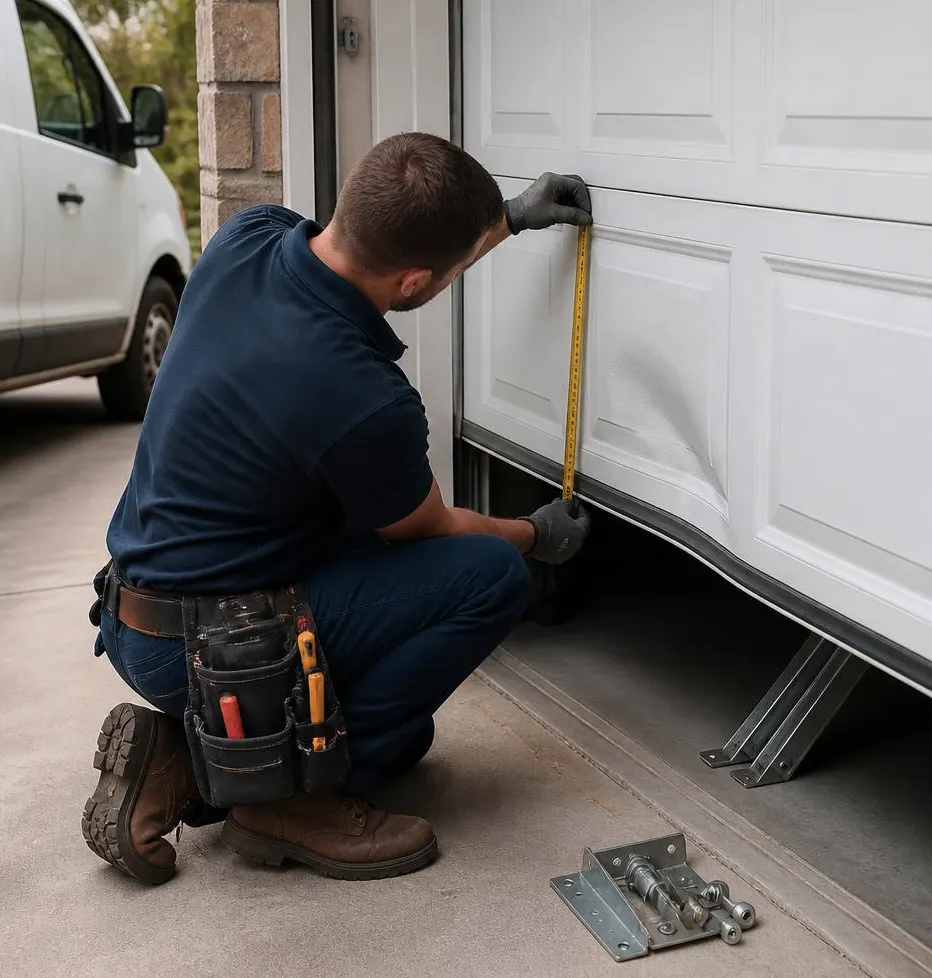
If your door is sagging, slow to respond, or making grinding or popping noises, it's worth a professional look before the next storm season adds more stress to weakened parts. We handle Garage Door Maintenance & Tune-Up visits that catch rust, loose hardware, and worn rollers early, and we do Garage Door Spring Repair for the sudden, no-warning failures that are the most common reason a working door stops working overnight. We'll tell you honestly whether a repair will hold or whether replacement is the smarter long-term move — no upsell, just the facts for your specific door.
Settle the argument for good — call Fort Meade Garage Door Pro for a straightforward inspection anywhere in Fort Meade, FL and the surrounding Polk County area.